
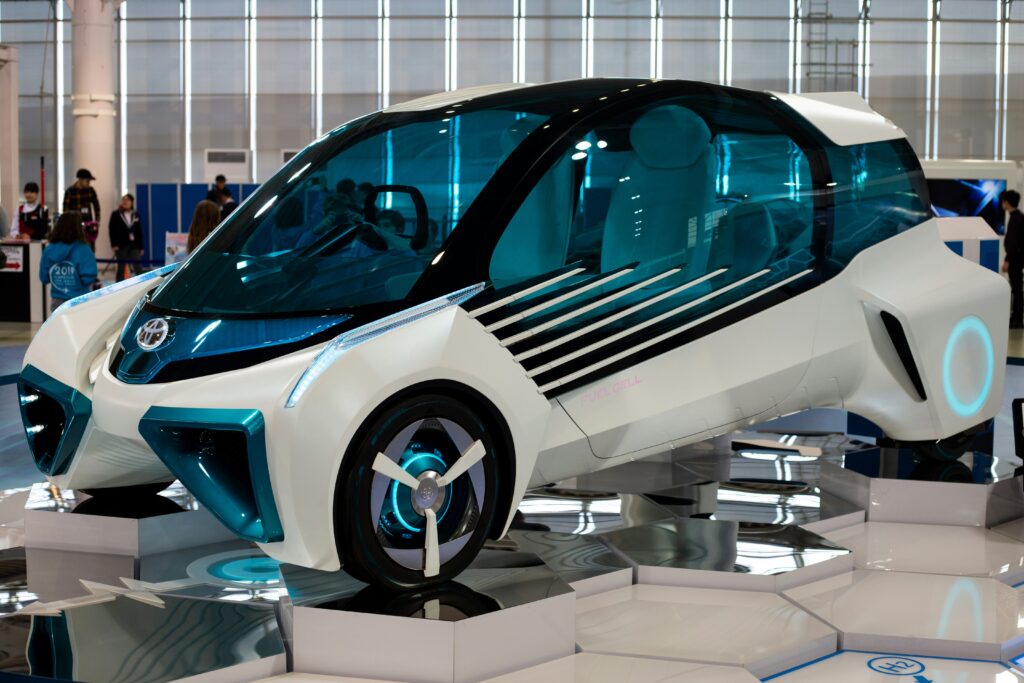
Hydrogen vehicles remain a small percentage of Canada’s zero-emission fleet, but emerging bus, truck and commercial applications could bring them into repair facilities with increasing frequency. Shops do not need to become hydrogen specialists overnight, but they should start to understand how these vehicles can change intake, staging and repair planning.
Written by Ken Hendricks
Your Next ZEV May Not Be Battery Electric
For most collision repairers, the transition to zero-emission vehicles has meant learning about high-voltage batteries, orange cables, charging systems and increasingly complex repair procedures. Battery-electric vehicles (BEVs) have dominated both the market and the industry’s attention for good reason. Hydrogen fuel cell vehicles remain a very small part of Canada’s vehicle fleet. But that does not mean collision facilities can ignore it.
Most of the current investment and testing around hydrogen is occurring in buses, commercial trucks, transit fleets and other heavier transportation applications. These vehicles may enter the market unevenly, through a fleet deployment or regional demonstration rather than through widespread consumer sales. For some collision facilities, the first hydrogen vehicle may not be a passenger car at all. It may be a damaged bus, delivery van or fleet vehicle arriving without much warning.
The numbers are small, but the need for awareness begins before the numbers become larger.
A Hydrogen Vehicle Is Still an Electric Vehicle
One of the easiest mistakes is to think of a hydrogen fuel cell vehicle as something entirely different from an electric vehicle. But in fact, a hydrogen FCEV is an electric vehicle that produces much of its electricity onboard.
Compressed hydrogen is stored in high-pressure tanks and supplied to a fuel cell stack, where it is converted into electricity. That electricity powers an electric traction motor. Most fuel cell vehicles also contain a high-voltage battery that supports acceleration, captures regenerative braking energy and helps manage the electrical system.
For a collision repairer, this means the vehicle may contain hydrogen storage tanks, fuel lines, valves, pressure regulators and a fuel cell stack, but it may also contain orange high-voltage cables, a traction battery, power electronics and electric drive components.
The shop is not dealing with hydrogen instead of high voltage. It is dealing with hydrogen and high voltage at the same time.
Experience with battery-electric vehicles provides a useful foundation, but it does not answer every question raised by a damaged FCEV.
Different Hazards Require Different Assumptions
Hydrogen is sometimes discussed in a way that makes it sound inherently dangerous. This is not particularly helpful. Gasoline, diesel, high-voltage batteries and hydrogen all present hazards, but those hazards can be managed when their properties are understood.
Hydrogen is colourless, odourless and highly flammable. It is stored onboard under very high pressure and, because it is exceptionally light, it generally rises and disperses rapidly in open air. That behaviour differs from gasoline vapour, which tends to remain closer to the ground.
For a collision or mechanical repair shop, these differences can affect decisions about indoor storage, ventilation, ignition sources and where an uncertain vehicle should be stored. Pits, overhead structures, enclosed bays and canopies may all need to be considered differently when hydrogen is involved.
The lesson is not that every damaged hydrogen vehicle presents an emergency. It is that the shop should not rely on assumptions developed around conventional fuels or battery-electric vehicles alone.
The First Challenge Is Knowing What Has Arrived at the Shop
Safe handling begins with correct identification, but that may not always be as simple as reading a badge on the trunk.
Passenger fuel cell vehicles may display model-specific or hydrogen markings, but commercial trucks and buses can be more difficult to recognize. Collision damage may obscure labels, and fleet vehicles may use platforms that look similar to diesel, battery-electric or hybrid models.
That makes identification an intake responsibility rather than something that should be left until repair or dismantle begins. Estimators, tow operators and yard personnel may all encounter the vehicle before a technician has an opportunity to examine it. Vehicle identification numbers, manufacturer information, emergency response guides, instrument displays and fuel-fill markings can all help confirm what type of vehicle has arrived. Information provided by the fleet owner, tow operator or emergency responder may also be important.
When the vehicle’s fuel and propulsion system cannot be confirmed, uncertainty should become part of the risk assessment. Guessing is not a safe intake procedure.
Repair Planning Begins Before the First Cut
Hydrogen tanks are designed to be extremely strong, but their location and supporting structures can influence the repair plan. Depending on the vehicle, tanks may be mounted beneath the floor, behind the passenger compartment, behind the cab of a truck or on the roof of a transit bus. Hydrogen lines, valves, pressure-relief devices and vent paths may extend beyond the tank itself.
Before welding, sectioning, straightening or applying heat, the shop needs to know what lies behind and around the repair area. Damage to a body panel may appear straightforward, but the proposed repair method could affect a tank mount, fuel line or protected zone. OEM procedures may identify no-cut or no-heat areas, special inspection requirements or operations that can only be completed by personnel with specific training. Depressurizing or removing a hydrogen system is not simply another version of draining a conventional fuel tank. The repairability of the visible damage is only one part of the decision. The repair method must also be safe for the energy systems contained within the vehicle.
Moving It Outside Is Not the Entire Plan
Outdoor staging may be appropriate when a hydrogen leak is suspected, or the vehicle’s condition remains uncertain. In open air, hydrogen can generally disperse more readily than it can inside a building.
However, simply moving the vehicle outside should not be treated as the end of the assessment. The location still needs to account for nearby buildings, ignition sources, employee and public access, other vehicles, overhead structures and emergency response access. Someone must also remain responsible for monitoring the vehicle, controlling access and communicating any change in its condition.
Outdoor staging is one part of a broader process. It does not replace identification, technical assessment or a clear decision about what happens next.
Five Questions Every Collision Shop Should Be Asking
Hydrogen readiness does not begin with purchasing expensive equipment. It begins with asking whether the shop has thought through the basic decisions it may face.
1. Can we reliably identify a hydrogen vehicle during intake?
The shop’s booking and intake process should confirm fuel and propulsion type before the vehicle is moved into the normal workflow. This may require checking the VIN, reviewing an emergency response guide or contacting the vehicle owner or fleet operator. Adding fuel and propulsion type to the intake process is a simple place to begin.
2. Do we know where the hydrogen tanks and lines are located?
Tank and fuel-system layouts vary considerably between passenger vehicles, trucks and buses. Staff should never assume that hydrogen components will be located in the same place from one model to another. Before lifting, measuring, pulling, drilling, cutting or welding, component locations should be confirmed through reliable OEM or emergency response information.
3. Do we have somewhere to place a damaged or uncertain vehicle?
A shop may need a temporary isolation area while the vehicle is identified and assessed. That location should not be improvised after the tow truck arrives. The facility should decide in advance who can authorize access, who is responsible for monitoring and what conditions would require emergency services or specialist assistance.
4. Do staff understand that hydrogen and high voltage may both be present?
Shutting down the high-voltage system does not necessarily remove the hazards associated with stored hydrogen. Likewise, isolating or depressurizing the hydrogen system does not mean the high-voltage battery is no longer energized. Hydrogen awareness should be added to the shop’s existing EV knowledge rather than treated as a replacement for it.
5. Do we know when the job exceeds our capabilities?
Not every collision facility will be equipped or qualified to work near a damaged hydrogen vehicle. A shop may be able to perform certain cosmetic repairs while referring structural, tank-related or fuel-system work elsewhere. Establishing referral contacts, technical resources and qualified service providers in advance can prevent rushed decisions when an unfamiliar vehicle arrives.
Readiness Does Not Require Reinventing the Shop
Most collision facilities do not need to make a major investment in hydrogen equipment today. The immediate priority is awareness, planning and knowing where the shop’s limits are.
That can begin with introductory training for estimators, technicians and front-office staff. Emergency response plans can be updated to include hydrogen vehicles. Intake forms can be revised, staging arrangements reviewed and local emergency services consulted.
The objective is not to turn every collision centre into a hydrogen specialist. It is to ensure that the first encounter with an FCEV does not lead to improvised decisions.
Preparing for the Vehicle That Is Not Here Yet
Hydrogen fuel cell vehicles represent only a tiny share of Canada’s present vehicle fleet. Battery-electric vehicles will continue to dominate many light-duty applications, while hydrogen may find its strongest opportunities in selected commercial, transit and heavy-duty operations.
For collision repairers, that means hydrogen may arrive unevenly — one bus fleet, commercial operator or regional project at a time. Shops do not need to predict exactly how quickly the market will grow. They do need to understand that an FCEV combines compressed hydrogen, high-voltage electricity and vehicle-specific repair restrictions. Identification, controlled intake, appropriate staging and informed repair planning will therefore matter from the very first encounter.
The best time to decide how the shop will manage a damaged hydrogen vehicle is not when one is already sitting in the yard.