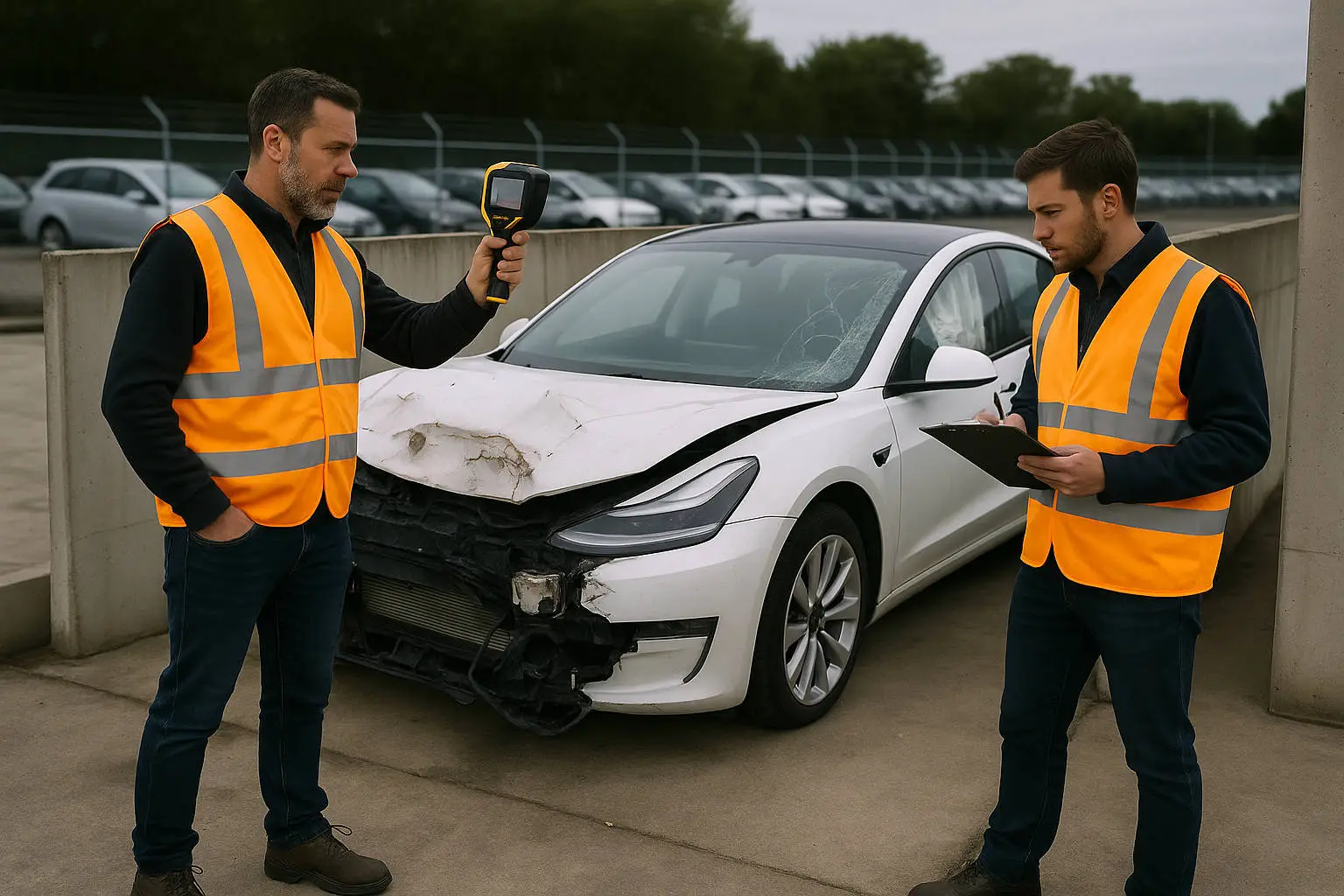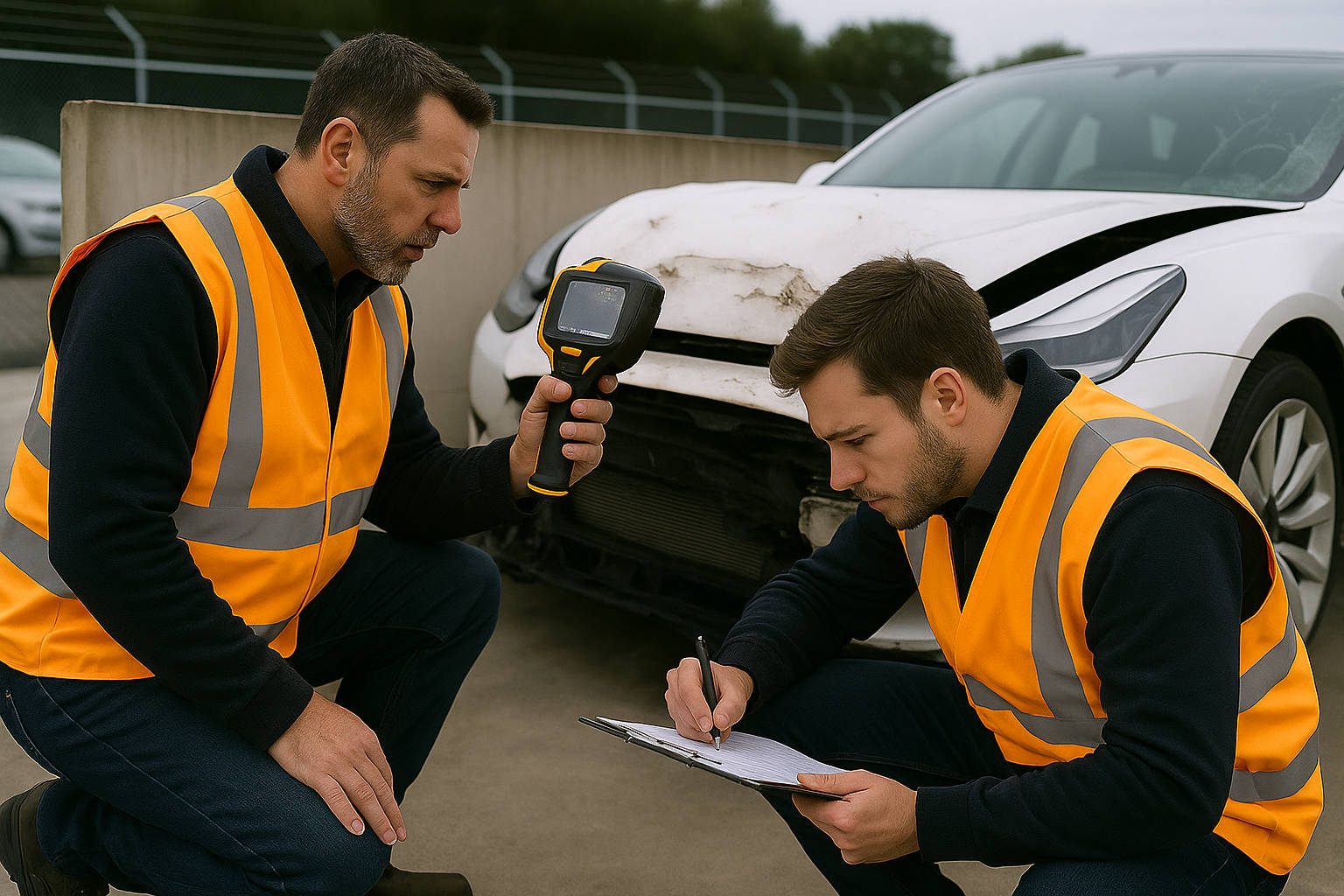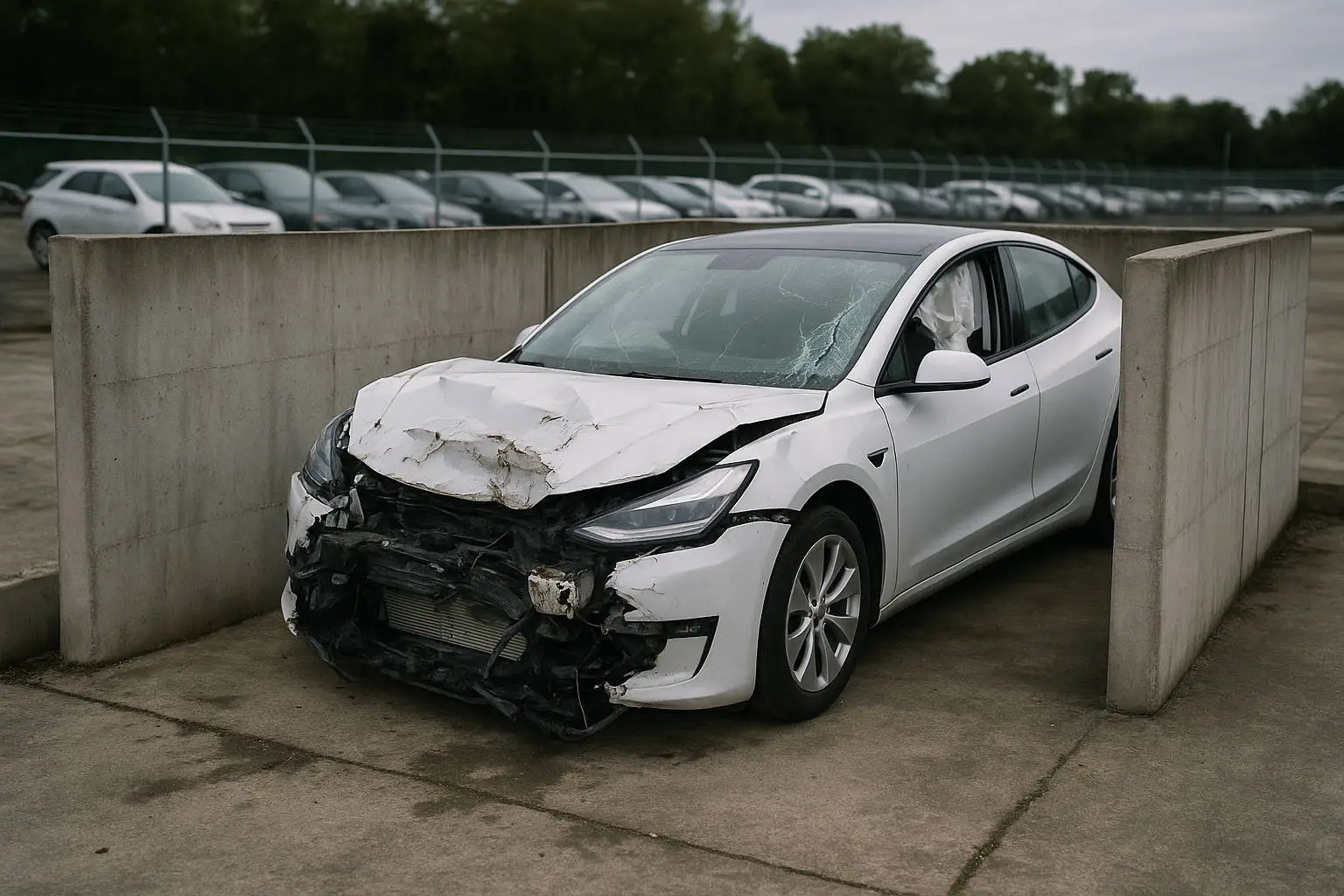
Primary Objectives of a Secondary Inspection:Detect Residual Energy in Battery Modules and CellsNEXT • Even after an EV fire is extinguished or the vehicle is initially stabilized, residual energy
can remain in undamaged battery modules and cells. This stranded energy poses a risk
of re-ignition, particularly during the critical first 24–48 hours of storage.Primary Objectives of a Secondary Inspection:Confirm the Shutdown of the High-Voltage System• Secondary inspections ensure the high-voltage system has been properly shut down,
isolating it from the rest of the vehicle and rendering it safe to handle.NEXT • A damaged high-voltage system can remain active even after an incident, creating
risks of electrocution or further battery instability.Primary Objectives of a Secondary Inspection:Identify Hidden Damage to the Battery• Detecting these issues early is critical to preventing secondary hazards, such as battery
leakage or thermal runaway, and helps inform decisions about repair, storage, or disposal.• Secondary inspections allow for a thorough evaluation of the battery pack and surrounding
components to uncover hidden damage.NEXT Primary Objectives of a Secondary Inspection:Ensure the Vehicle is Safe to Handle, Process, or Move• For high-risk vehicles, additional precautions such as isolation, continued monitoring,
or containment measures may still be required before declaring the vehicle safe for
inventory or processing.• Secondary inspections verify that all safety protocols have been followed and that
the vehicle is stable enough for further handling.NEXT Primary Objectives of a Secondary Inspection:Minimize Risks to Personnel and Facilities• A robust secondary inspection process also demonstrates a facility’s commitment to industry
best practices and compliance with evolving safety standards.• Secondary inspections play a vital role in ensuring the safety of everyone involved in handling
damaged EVs, including tow operators, facility personnel, and emergency responders.