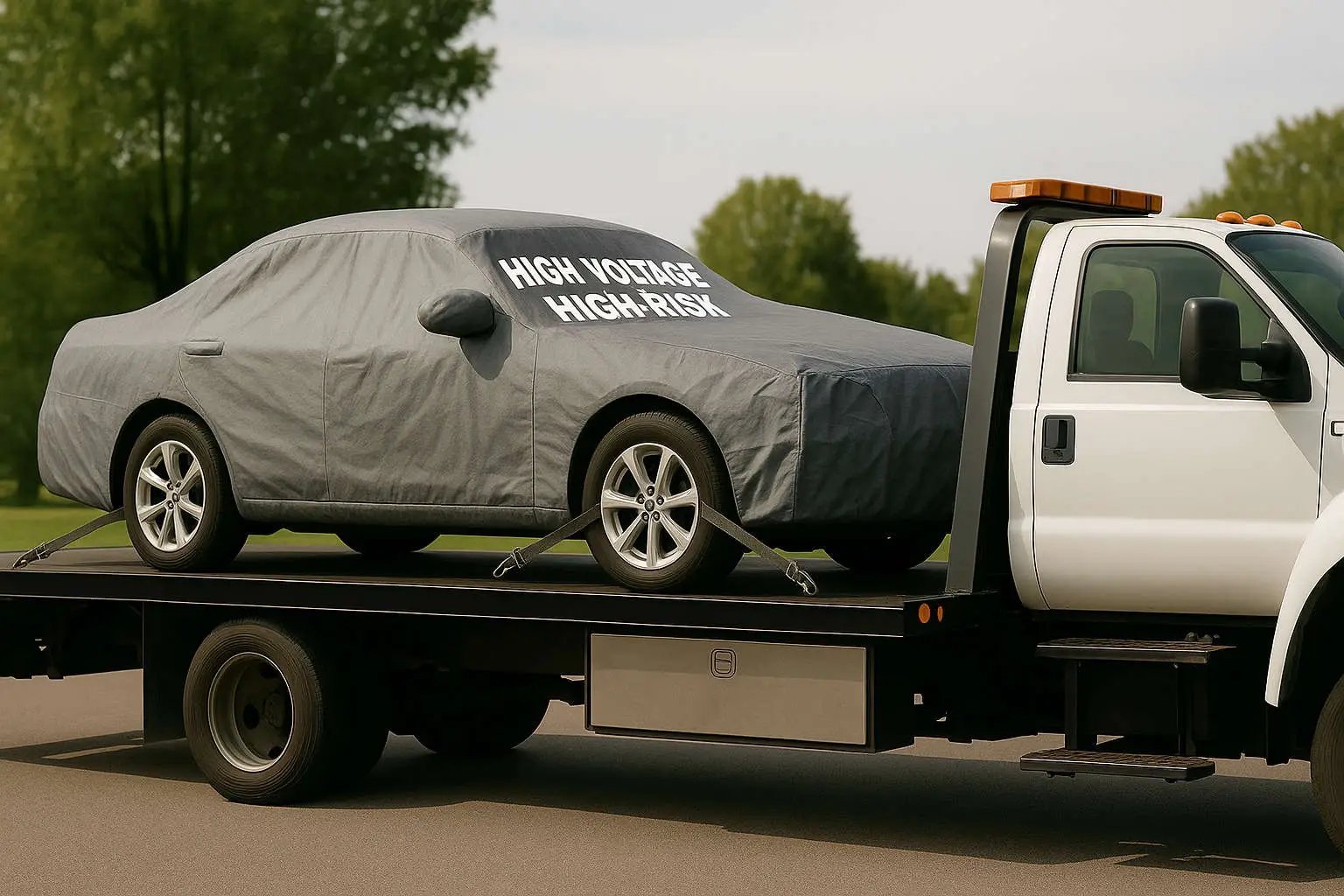
Best Practices for Tarping• Identification and Notification:NEXT • Clearly mark vehicles requiring tarping as “HIGH VOLTAGE – HIGH RISK.”• Notify staff about the status of tarped vehicles and the potential for gas emissions
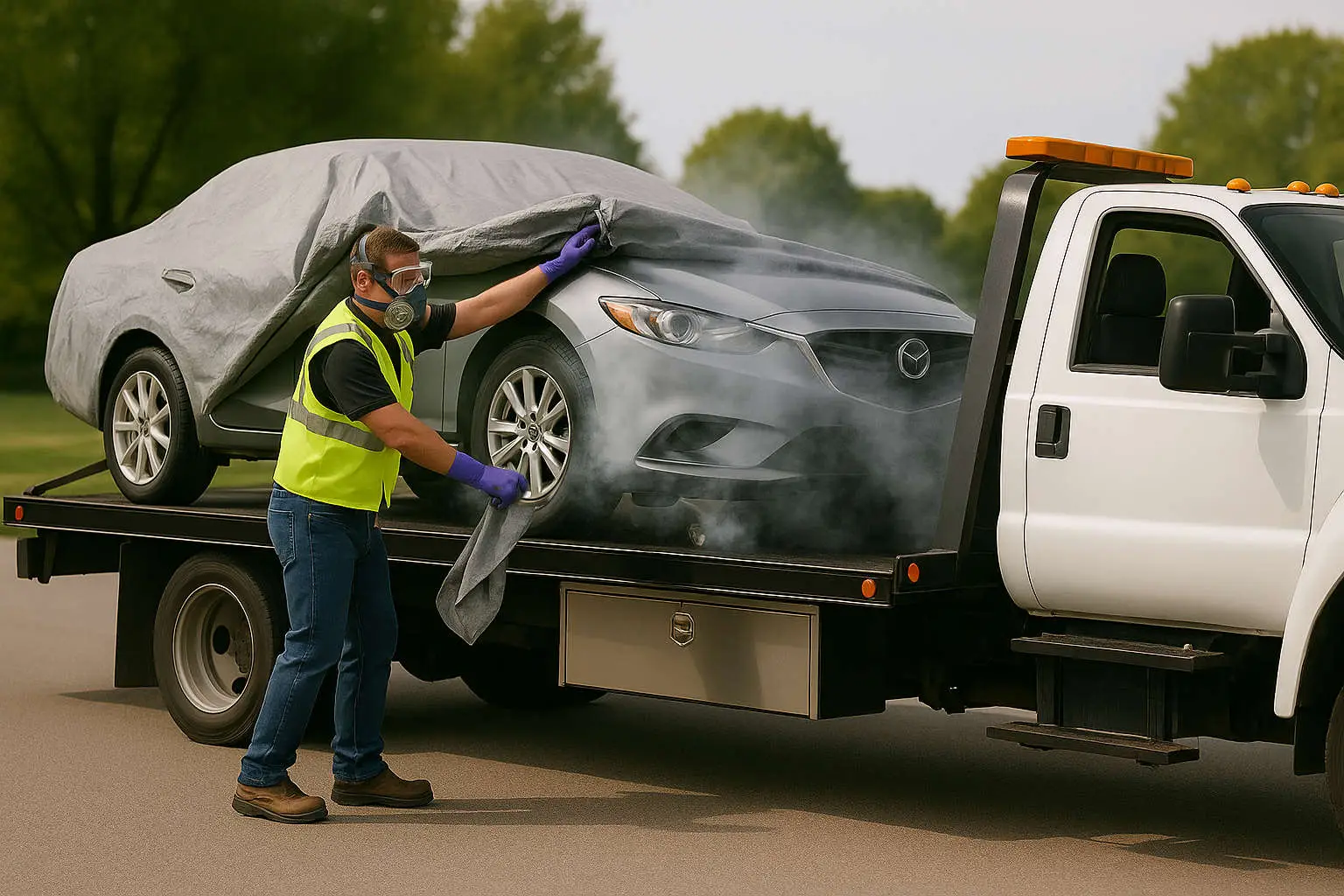
upon tarp removal.Best Practices for Tarping• Use of Protective Equipment:NEXT • When removing or applying a tarp to a high-risk EV, staff must wear appropriate PPE,
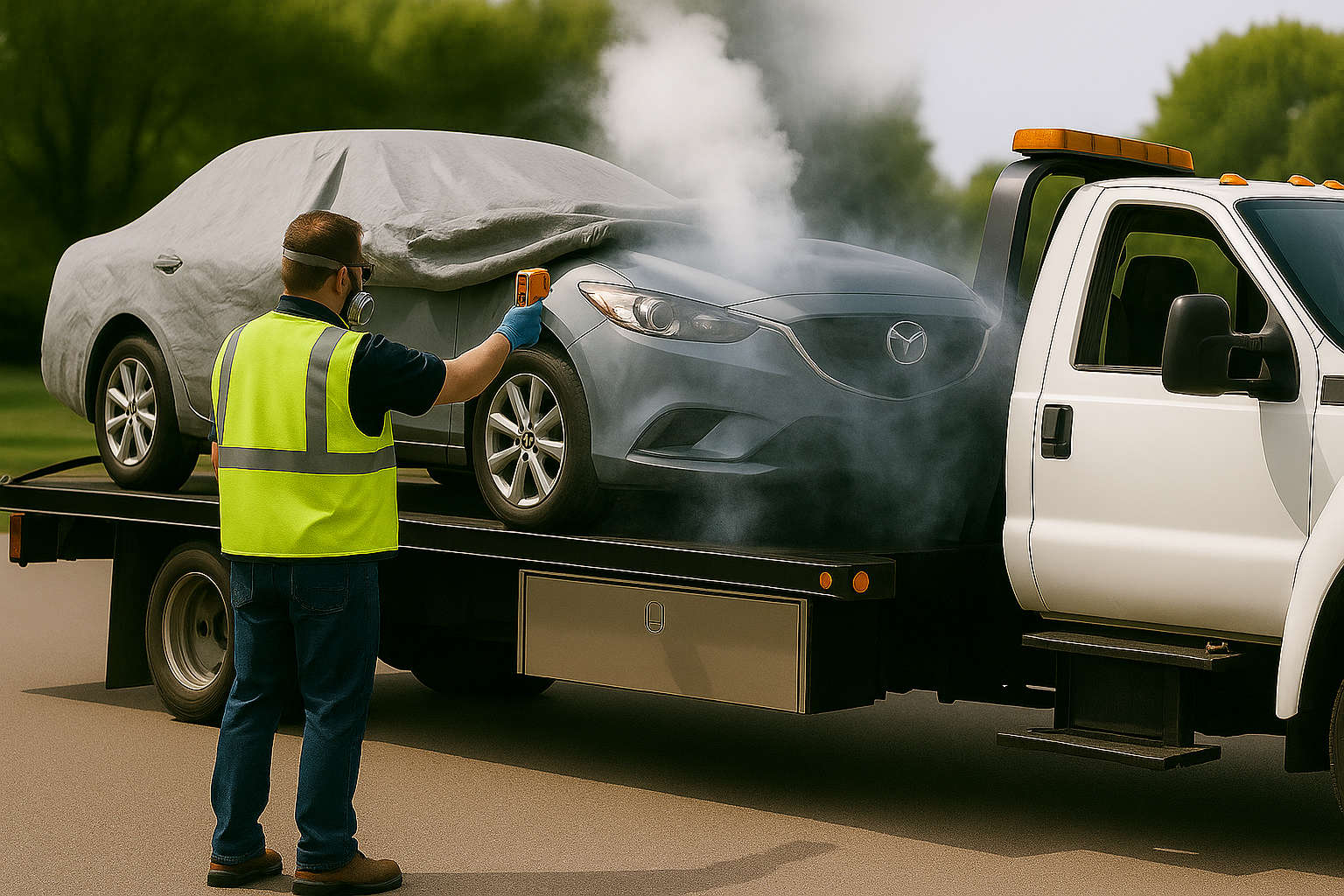
including respirators rated for Hydrogen Fluoride gas exposure. • Use gloves, goggles, and other protective gear to prevent contact with toxic substances.Best Practices for Tarping• Ventilation Requirements:NEXT • Always ensure the area is well-ventilated before applying or removing a tarp. • Use portable air monitoring equipment to detect the presence of hazardous
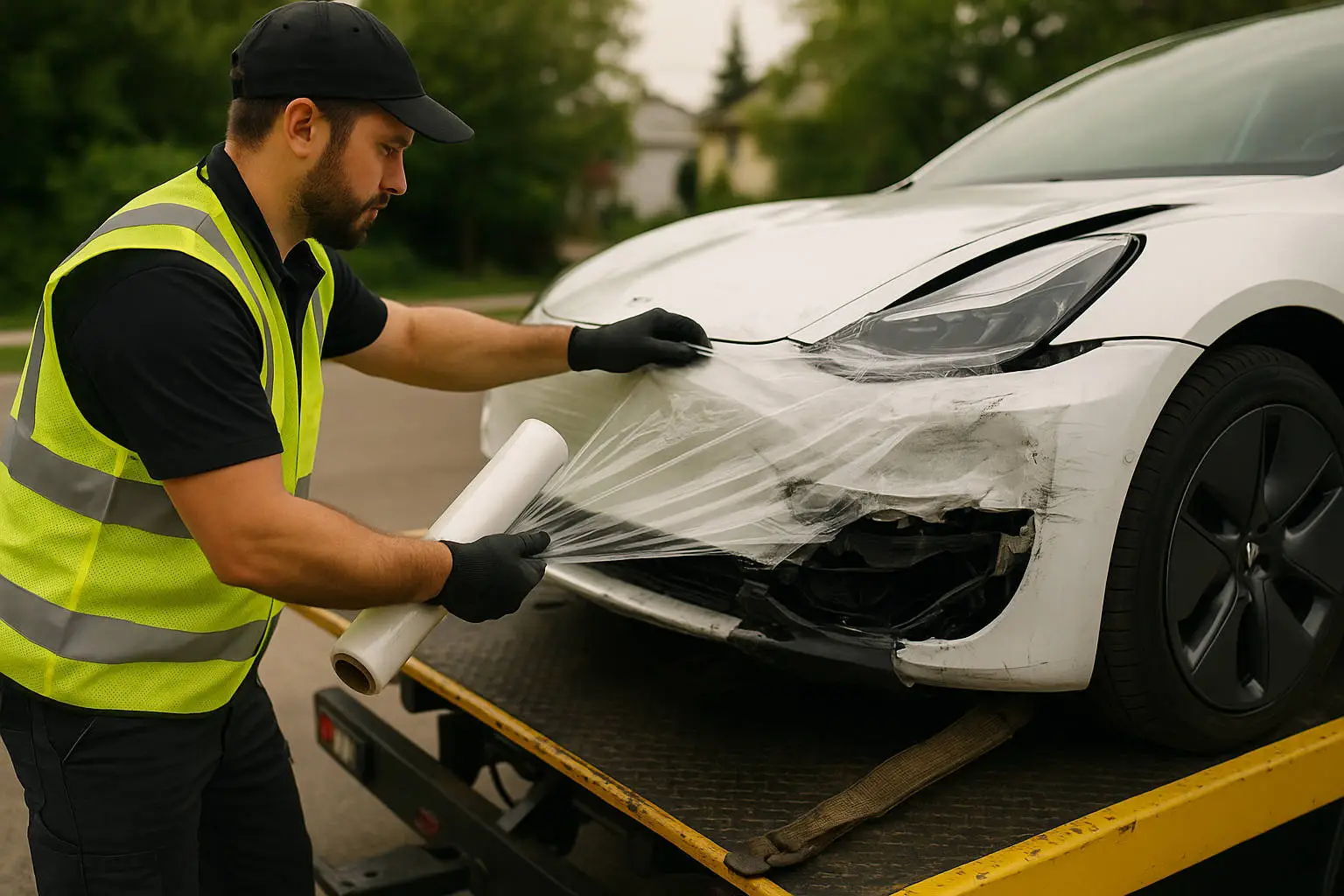
gases before proceeding.Best Practices for Tarping• Material Selection:• Waterproof collision wraps for weather protection.• Clear plastic for visibility and hazard identification.• Choose tarps or protective coverings designed for the specific scenario: • Fire-resistant blankets for thermal risk.