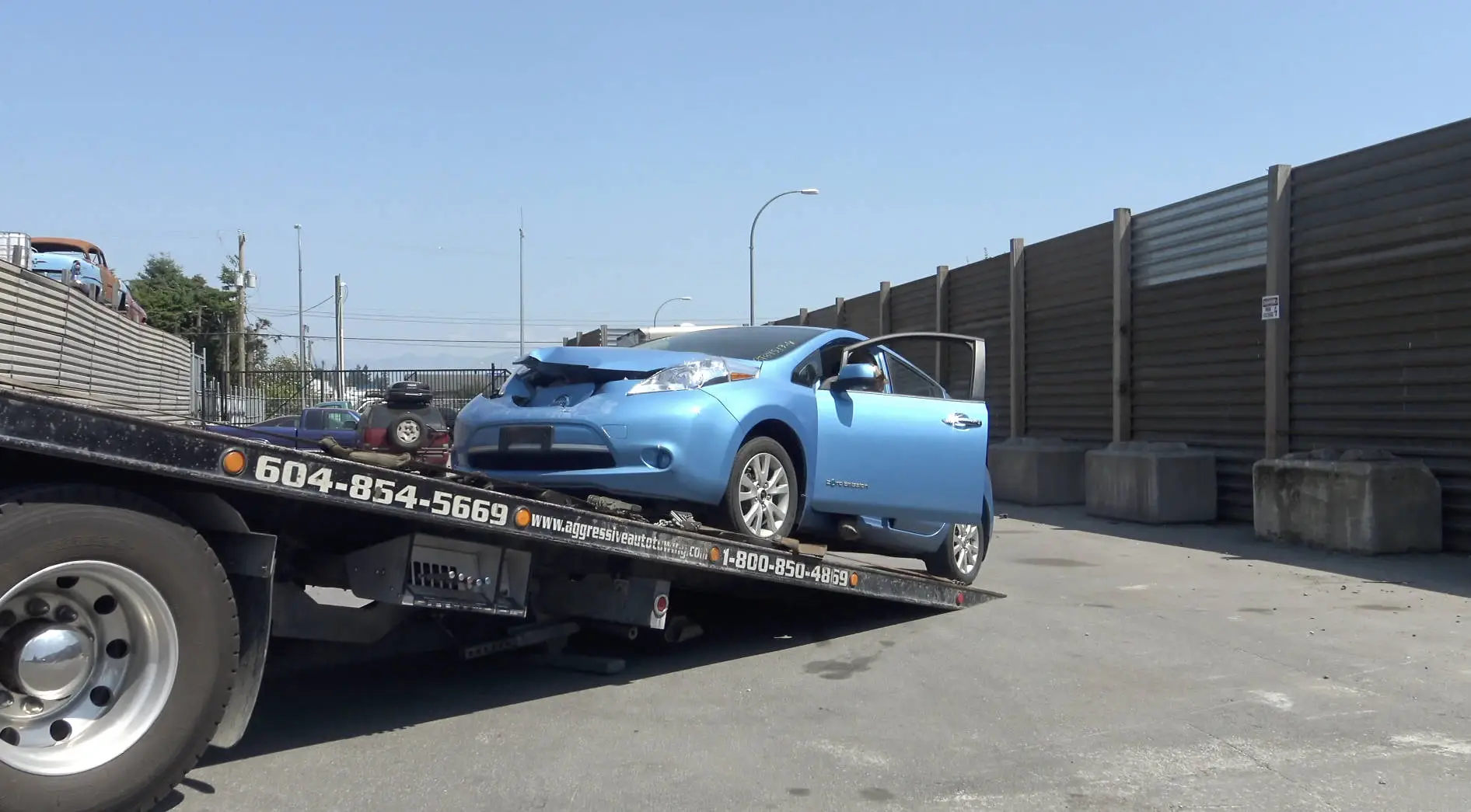
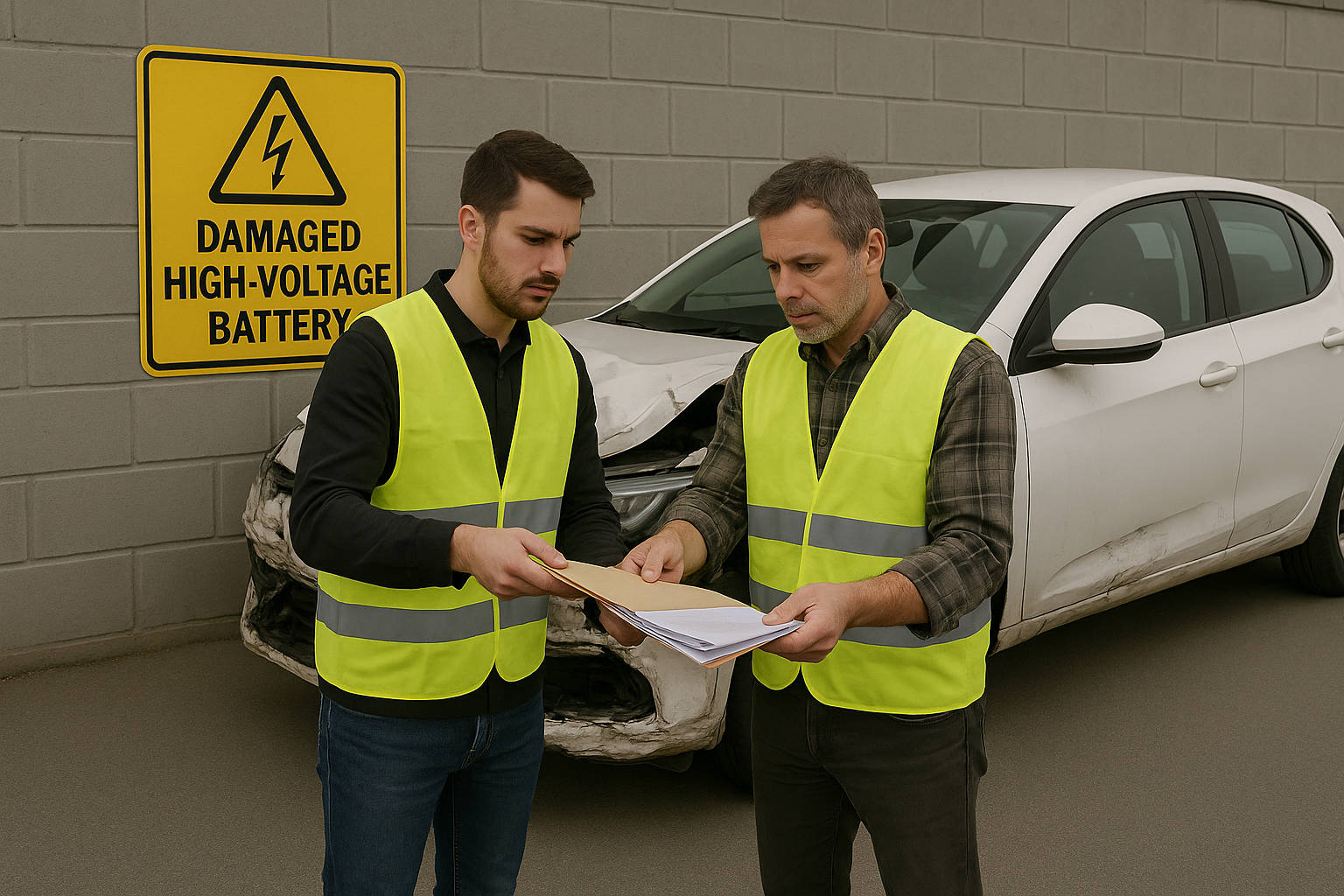
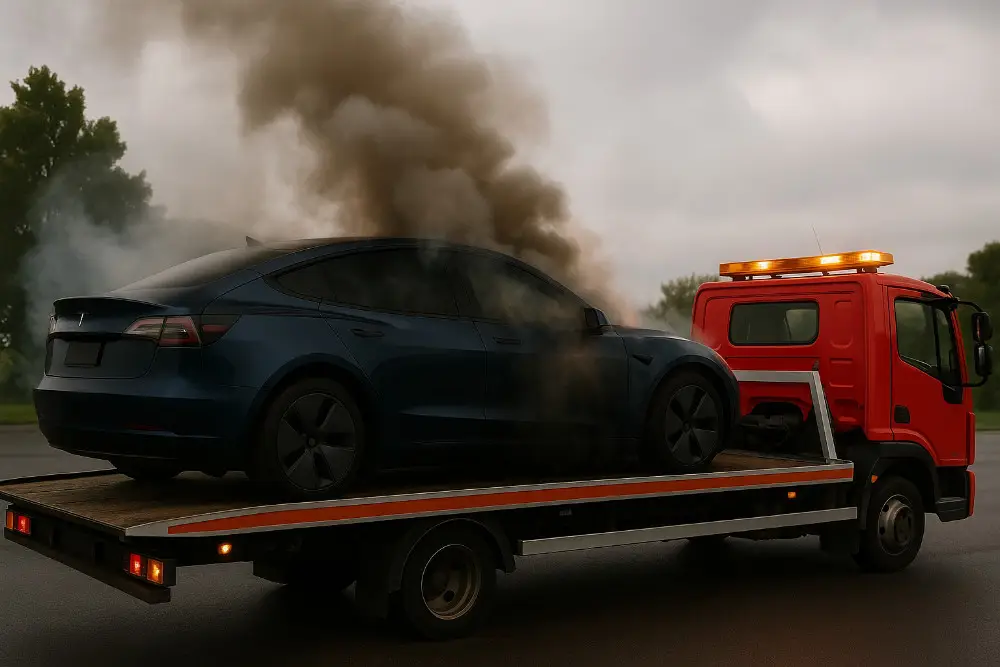
• Notify all relevant parties (facility staff, tow operators) about the vehicle's condition
and specific hazards.Secondary TowingKey steps in the process include but are not limited to:NEXT • Use standardized communication protocols to document and share critical details.• Key Information to Communicate:• Battery casing condition (intact, damaged).• Evidence of submersion or fire damage.• Vehicle charge status (fully charged, discharged).• Additional hazards (e.g. leaking fluids, exposed wiring).• Pre-Transport Planning• Define Responsibilities: Clearly outline what information needs to be communicated,
to whom, and when.• They should have specialized training in EV handling, including knowledge of
lithium-ion battery risks and emergency response procedures.Secondary TowingKey steps in the process include but are not limited to:NEXT • Experience with damaged or hazardous EVs.• Familiarity with secure towing and isolation techniques to minimize risks during transport.• Tow Operator Qualifications• Operators must meet the minimum requirements as a sub-contractor
(refer to sub-contractor qualifications, Section 1, Lesson 1.4)• Confirm their preparedness to handle any identified hazards.Secondary TowingKey steps in the process include but are not limited to:NEXT • Ensure a complete log of inspection findings accompanies the vehicle.• Include visual evidence (photographs) of damage or hazardous conditions.• Communication and Coordination• Provide receiving facilities with detailed information on the vehicle's condition before delivery.• Battery ignition or thermal runaway.Secondary TowingKey steps in the process include but are not limited to:• Fluid leakage or environmental contamination.• Have emergency response protocols readily available for the tow operator and facility staff.• Contingency Measures• Prepare for unforeseen complications during towing, including: